Best practice
Duration: 60 minutes
Year levels: 1, 1, 1, 1, 1, 1, 10, 10, 10, 10, 10, 10, 2, 2, 2, 2, 2, 2, 3, 3, 3, 3, 3, 3, 4, 4, 4, 4, 4, 4, 5, 5, 5, 5, 5, 5, 6, 6, 6, 6, 6, 6, 7, 7, 7, 7, 7, 7, 8, 8, 8, 8, 8, 8, 9, 9, 9, 9, 9, 9, Foundation, Foundation, Foundation, Foundation, Foundation, Foundation
Category: Number, Number, Number, Number, Number, Number, Number Operations, Number Operations, Number Operations, Number Operations, Number Operations, Number Operations, Proportions, Proportions, Proportions, Proportions, Proportions, Proportions, Real Numbers, Real Numbers, Real Numbers, Real Numbers, Real Numbers, Real Numbers
Proficiency standards: Understanding, Understanding, Understanding, Understanding, Understanding, Understanding
AITSL standards: 1.2 Understand how students learn, 1.2 Understand how students learn, 1.2 Understand how students learn, 1.2 Understand how students learn, 1.2 Understand how students learn, 1.2 Understand how students learn, 2.1 Content and teaching strategies of the teaching area, 2.1 Content and teaching strategies of the teaching area, 2.1 Content and teaching strategies of the teaching area, 2.1 Content and teaching strategies of the teaching area, 2.1 Content and teaching strategies of the teaching area, 2.1 Content and teaching strategies of the teaching area, 2.2 Content selection and organisation, 2.2 Content selection and organisation, 2.2 Content selection and organisation, 2.2 Content selection and organisation, 2.2 Content selection and organisation, 2.2 Content selection and organisation, 2.3 Curriculum, assessment and reporting, 2.3 Curriculum, assessment and reporting, 2.3 Curriculum, assessment and reporting, 2.3 Curriculum, assessment and reporting, 2.3 Curriculum, assessment and reporting, 2.3 Curriculum, assessment and reporting, 3.4 Select and use resources, 3.4 Select and use resources, 3.4 Select and use resources, 3.4 Select and use resources, 3.4 Select and use resources, 3.4 Select and use resources, 5.1 Assess student learning, 5.1 Assess student learning, 5.1 Assess student learning, 5.1 Assess student learning, 5.1 Assess student learning, 5.1 Assess student learning, 6.2 Engage in professional learning and improve practice, 6.2 Engage in professional learning and improve practice, 6.2 Engage in professional learning and improve practice, 6.2 Engage in professional learning and improve practice, 6.2 Engage in professional learning and improve practice, 6.2 Engage in professional learning and improve practice
Use: Groups of Teachers, Groups of Teachers, Groups of Teachers, Groups of Teachers, Groups of Teachers, Groups of Teachers
Teaching practices: Assessment, Assessment, Assessment, Assessment, Assessment, Assessment, Assessment Strategies, Assessment Strategies, Assessment Strategies, Assessment Strategies, Assessment Strategies, Assessment Strategies, Attitudes, Attitudes, Attitudes, Attitudes, Attitudes, Attitudes, Differentiation, Differentiation, Differentiation, Differentiation, Differentiation, Differentiation, Engagement, Engagement, Engagement, Engagement, Engagement, Engagement, Feedback & Reporting, Feedback & Reporting, Feedback & Reporting, Feedback & Reporting, Feedback & Reporting, Feedback & Reporting, Group Work, Group Work, Group Work, Group Work, Group Work, Group Work, Planning, Planning, Planning, Planning, Planning, Planning, Sequencing, Sequencing, Sequencing, Sequencing, Sequencing, Sequencing, Student Learning, Student Learning, Student Learning, Student Learning, Student Learning, Student Learning
Module 3 presents a range of reliable strategies for teaching fractions. They are grouped around the four topics of fraction sense, dividing, equivalence, and addition and subtraction.
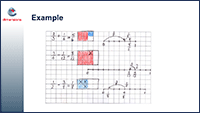
This module considers what being a ‘good mathematics teacher’ means. It has links to the AAMT Standards for Excellence. There are discussions and activities related to planning and questioning, with a number of examples provided to support best teaching practice.
Downloads
- Slides: Best practice (PPTX 9,909 KB)
- Facilitator Notes: Slides: Best practice (DOCX 85 KB)
Related modules
- https://dmn.aamt.edu.au/learning-modules/opening-the-top-drawer-to-fractions/opening-the-top-drawer-to-fractions-module-1/
- https://dmn.aamt.edu.au/learning-modules/opening-the-top-drawer-to-fractions/
- https://dmn.aamt.edu.au/learning-modules/opening-the-top-drawer-to-fractions/opening-the-top-drawer-to-fractions-module-2/
- https://dmn.aamt.edu.au/learning-modules/opening-the-top-drawer-to-fractions/
- https://dmn.aamt.edu.au/learning-modules/opening-the-top-drawer-to-fractions/opening-the-top-drawer-to-fractions-module-4/
- https://dmn.aamt.edu.au/learning-modules/opening-the-top-drawer-to-fractions/
- https://dmn.aamt.edu.au/learning-modules/opening-the-top-drawer-to-fractions/opening-the-top-drawer-to-fractions-module-5/
- https://dmn.aamt.edu.au/learning-modules/opening-the-top-drawer-to-fractions/
- https://dmn.aamt.edu.au/learning-modules/opening-the-top-drawer-to-fractions/opening-the-top-drawer-to-fractions-module-6/
- https://dmn.aamt.edu.au/learning-modules/opening-the-top-drawer-to-fractions/