Assessment
Duration: 45 minutes
Year levels: 1, 1, 1, 1, 1, 10, 10, 10, 10, 10, 2, 2, 2, 2, 2, 3, 3, 3, 3, 3, 4, 4, 4, 4, 4, 5, 5, 5, 5, 5, 6, 6, 6, 6, 6, 7, 7, 7, 7, 7, 8, 8, 8, 8, 8, 9, 9, 9, 9, 9, Foundation, Foundation, Foundation, Foundation, Foundation
Category: Number, Number, Number, Number, Number, Number Operations, Number Operations, Number Operations, Number Operations, Number Operations, Proportions, Proportions, Proportions, Proportions, Proportions, Real Numbers, Real Numbers, Real Numbers, Real Numbers, Real Numbers
Proficiency standards: Understanding, Understanding, Understanding, Understanding, Understanding
AITSL standards: 1.2 Understand how students learn, 1.2 Understand how students learn, 1.2 Understand how students learn, 1.2 Understand how students learn, 1.2 Understand how students learn, 2.3 Curriculum, assessment and reporting, 2.3 Curriculum, assessment and reporting, 2.3 Curriculum, assessment and reporting, 2.3 Curriculum, assessment and reporting, 2.3 Curriculum, assessment and reporting, 3.4 Select and use resources, 3.4 Select and use resources, 3.4 Select and use resources, 3.4 Select and use resources, 3.4 Select and use resources, 5.1 Assess student learning, 5.1 Assess student learning, 5.1 Assess student learning, 5.1 Assess student learning, 5.1 Assess student learning, 6.2 Engage in professional learning and improve practice, 6.2 Engage in professional learning and improve practice, 6.2 Engage in professional learning and improve practice, 6.2 Engage in professional learning and improve practice, 6.2 Engage in professional learning and improve practice
Use: Groups of Teachers, Groups of Teachers, Groups of Teachers, Groups of Teachers, Groups of Teachers
Teaching practices: Assessment, Assessment, Assessment, Assessment, Assessment, Assessment Strategies, Assessment Strategies, Assessment Strategies, Assessment Strategies, Assessment Strategies, Attitudes, Attitudes, Attitudes, Attitudes, Attitudes, Curriculum, Curriculum, Curriculum, Curriculum, Curriculum, Differentiation, Differentiation, Differentiation, Differentiation, Differentiation, Engagement, Engagement, Engagement, Engagement, Engagement, Feedback & Reporting, Feedback & Reporting, Feedback & Reporting, Feedback & Reporting, Feedback & Reporting, Group Work, Group Work, Group Work, Group Work, Group Work, Planning, Planning, Planning, Planning, Planning, Sequencing, Sequencing, Sequencing, Sequencing, Sequencing, Student Learning, Student Learning, Student Learning, Student Learning, Student Learning, Using Data, Using Data, Using Data, Using Data, Using Data
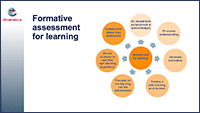
Module 4 considers the purposes of assessment, and what assessment should do. Discussion, activities and examples of diagnostic, formative and summative assessment are linked to the assessment goals.
This module revisits the different purposes and types of assessment. There are activities to consider and suggestions for developing assessment tasks, including NAPLAN style questions.
Downloads
- Slides: Assessment (PPTX 1,757 KB)
- Facilitator Notes: Assessment (DOCX 79 KB)
Related modules
- https://dmn.aamt.edu.au/learning-modules/opening-the-top-drawer-to-fractions/opening-the-top-drawer-to-fractions-module-1/
- https://dmn.aamt.edu.au/learning-modules/opening-the-top-drawer-to-fractions/
- https://dmn.aamt.edu.au/learning-modules/opening-the-top-drawer-to-fractions/opening-the-top-drawer-to-fractions-module-2/
- https://dmn.aamt.edu.au/learning-modules/opening-the-top-drawer-to-fractions/
- https://dmn.aamt.edu.au/learning-modules/opening-the-top-drawer-to-fractions/opening-the-top-drawer-to-fractions-module-3/
- https://dmn.aamt.edu.au/learning-modules/opening-the-top-drawer-to-fractions/
- https://dmn.aamt.edu.au/learning-modules/opening-the-top-drawer-to-fractions/opening-the-top-drawer-to-fractions-module-5/
- https://dmn.aamt.edu.au/learning-modules/opening-the-top-drawer-to-fractions/
- https://dmn.aamt.edu.au/learning-modules/opening-the-top-drawer-to-fractions/opening-the-top-drawer-to-fractions-module-6/
- https://dmn.aamt.edu.au/learning-modules/opening-the-top-drawer-to-fractions/